After busy back-to-back weeks that included the Virginia Film Festival and Hard Light screenings of Nosferatu the Vampyre and Horse Money, we’re back with another newsletter full of reviews of new releases coming to Richmond soon.
This was my (Warner) third year at Virginia Film Festival, and it’s always such a treat to see what films they bring to Charlottesville. The barrier for entry is so low and the cost of each ticket is cheap, so I highly recommend visiting it or making it your first film festival next year if you haven’t before.
This year, because I had just visited the New York Film Festival, I didn’t push myself as hard as I had in years past when I watched a dozen or more films. I also elected to go to two repertory screenings to see TCM’s Ben Mankiewicz; those screenings were great, but they won’t be covered below as this space is reserved for previewing new releases that will be coming to Richmond soon.
- Resurrection (2025) dir. Bi Gan
- The Testament of Ann Lee (2025) dir. Mona Fastvold
- No Other Choice (2025) dir. Park Chan-wook
- The Love That Remains (2025) dir. Hlynur Pálmason
- It Was Just An Accident (2025) dir. Jafar Panahi
- Train Dreams (2025) dir. Clint Bentley
- Mirrors No. 3 (2025) dir. Christian Petzold
- What’s Next?
Resurrection (2025) dir. Bi Gan
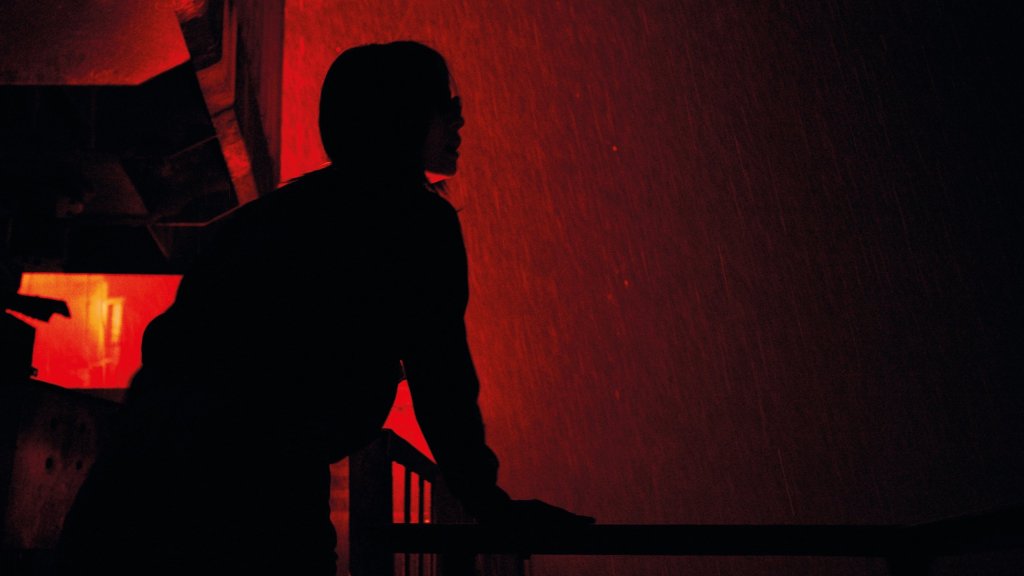
For those who had seen a Bi Gan film before (Long Day’s Journey Into Night, Kaili Blues), the highlight of Virginia Film Festival was already preordained and predestined to be Resurrection. Bi Gan is a master of the arthouse scene, taking his love for Andrei Tarkovsky and Apichatpong Weerasethakul and weaving them into his own films. His Long Day’s Journey Into Night wowed me on a first watch with its dreamy visuals and infamous hour-long one-shot to end the movie, and it was even better on a second pass on a 3D television.
Resurrection was everything I could have hoped for and more. It functions as an entire history of cinema wrapped inside a sci-fi tale as a robot “dreams” entire stories for us, the viewer, to partake in. The earliest segment of the film is a Guy Maddin inspired silent take with echoes of German expressionism. It then progresses to cover different genres and areas of film history including a Le Samourai inspired noir, a Kobayashi-ish winter folktale, a Bressonian story of sleight-of-hand, and a hypnotizing Wong Kar-Wai riff that functions as a city-bound Y2K alba. If one segment isn’t quite working for you or you don’t appreciate all of the homages, just wait a few minutes and you’ll get a new story with new points of reference that you may enjoy more.
I’ve seen some claim it’s pretentious, and I heard some mixed reviews as I left the theater on Wednesday night, but I think if anything, we need more films that are pretentious or are intentionally trying to create lasting meditative art. Cinema, and art in general, has gone the way of commercialism and passive “easy-watches” rather than trying to create actual works of artistic value. This film explores that relationship and compares cinema to a candle. It’ll only burn as long as we keep its legacy alive, and if it’s at the end of its wick, then it’s been a great ride.
This is coming to theaters courtesy of Janus, and I urge you to give it a watch at your first chance. It may not be for you, but this is the type of film we at Hard Light believe we ought to support as much as we can. It’s easily my favorite of the year, and it was a real treat getting to see it at VAFF.
The Testament of Ann Lee (2025) dir. Mona Fastvold

I’ve fully been on the Brady Corbet train since his rise to fame with The Brutalist in 2024. There have been some hiccups (what are we doing with that ending to The Brutalist, Brady?), but I think his style of filmmaking is effective and his big swings are worth the risk (Vox Lux hive assemble!). His partner, both in life and creatively, Mona Fastvold has had fewer attempts at these swings, but I’ve had mostly similar results with her work. I didn’t adore The World to Come, but I liked the attempt and if there weren’t already Ammonite and Portrait of a Lady on Fire, I’d probably be more responsive to it. However, I was excited for the newest effort in The Testament of Ann Lee because of the historical accuracy and the “swing.”
Having seen the film, it was nearly exactly what I expected for both good and bad. On one hand, Seyfried kills it in this role as she sings, leads, and steals the screen in each of her numerous scenes. On the other hand, the film is indeed a Shaker musical with historical accuracy, so it’s not exactly an easy sit unless you like musicals or are already calloused to 18th century misogyny. It functions a bit like a toned-down musical Benedetta where, if you buy into the religious fervor, you may fall head over heels for this one, but I, and most of the VAFF crowd, seemed to be a little underwhelmed by it.
I do think this one has a chance at the Oscars for production design, adapted screenplay, and costumes, but the real winner is Seyfried who is likely to get a Best Lead Actress nomination (if not win). The film will get a qualifying limited release at Christmas by Searchlight Pictures before going wider in early 2026, and I do recommend seeing it because it’s certainly a buzzy film.
No Other Choice (2025) dir. Park Chan-wook
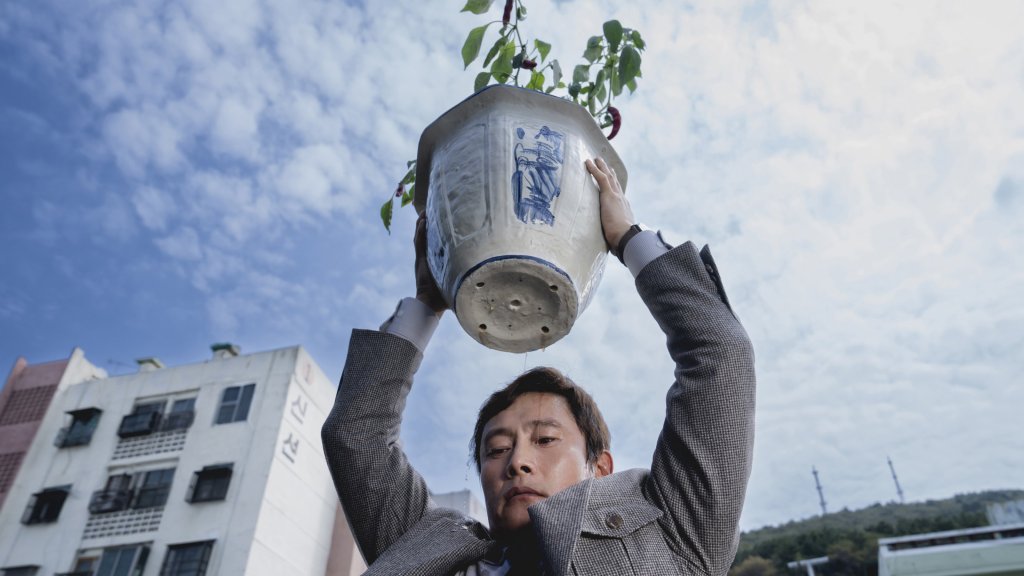
Park Chan-wook has undergone multiple transformations as a director. He started as being typecast a bit as a “Tartan Asia Extreme” director as his movies came to American audiences via DVD and were known for being gritty or boundary-pushing. He then rebelled from this a bit to try and shed the label by making more experimental or cross-genre swings like I’m a Cyborg, but That’s Okay and Stoker. Finally, his recent efforts have been a bit of a mixture of his early boundary-pushing style but with the same genre-blending elements of the mid-period, resulting in some of his strongest works in The Handmaiden, his newest film No Other Choice, and my personal favorite in Decision to Leave.
In No Other Choice, Park makes an anti-capitalist film that’s somehow even more prescient and apt for American audiences than Parasite was in 2019. In No Other Choice, our protagonist, played by Lee Byung-hun, is fired as his company is trying to downsize to increase profit margin and replace workers with artificial intelligence. As a result, he needs to find a new job and has no other choice than to kill other unemployed workers vying for the same open positions. In a post-DOGE and increasingly AI-heavy world, Park’s story feels ripped straight from the headlines. Despite this uncomfortable premise, the film is remarkably watchable with humor throughout and some of my favorite needle-drops of the year. Park takes the crab-pot story and infuses it with levity and heart, making it one of his best efforts and giving him a chance at a Best Picture nomination here with this one.
The Love That Remains (2025) dir. Hlynur Pálmason
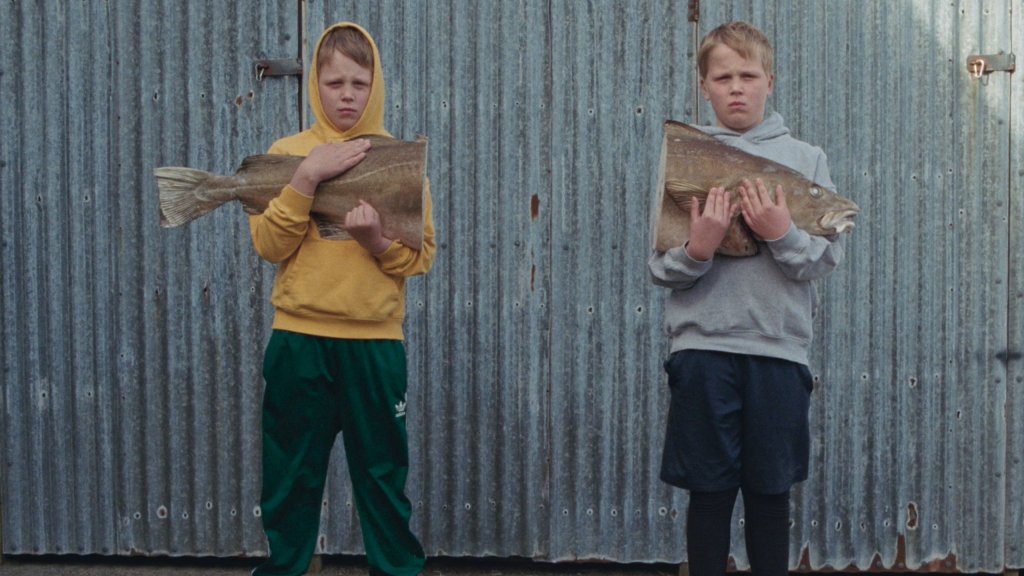
I had heard the legend of Pálmason’s Godland, an arthouse classic from the moment it was released a few years ago, but I hadn’t gotten to it until doing homework for VAFF this year. It’s a remarkable film about religion, colonization, and nature’s role in both. So I was naturally a little nervous when the person introducing this film at VAFF stated that it was “completely different from Godland in nearly every way”.
It admittedly is far from reaching the heights of Godland as it dwells mostly in the modern domestic and familial space, choosing a smaller scope with Pálmason’s own children starring in the film. Though I didn’t love it because of its uneasy relationship to abstract and dreamlike visuals that don’t totally cohere with the otherwise grounded story, I did find the cinematography of Iceland to be top-notch yet again. Pálmason was a visual artist before he was a director, and it shows in this one as there’s a true “every frame is a painting” aspect to this one. I’ll say that while I was underwhelmed due to comparing this to Godland, Lewis loved it and I know others also enjoyed it, so it could be my own fault for watching the two films in quick succession. I recommend giving it a watch when it comes to Richmond in early 2026 to see if it clicks more for you than it did for me!
It Was Just An Accident (2025) dir. Jafar Panahi
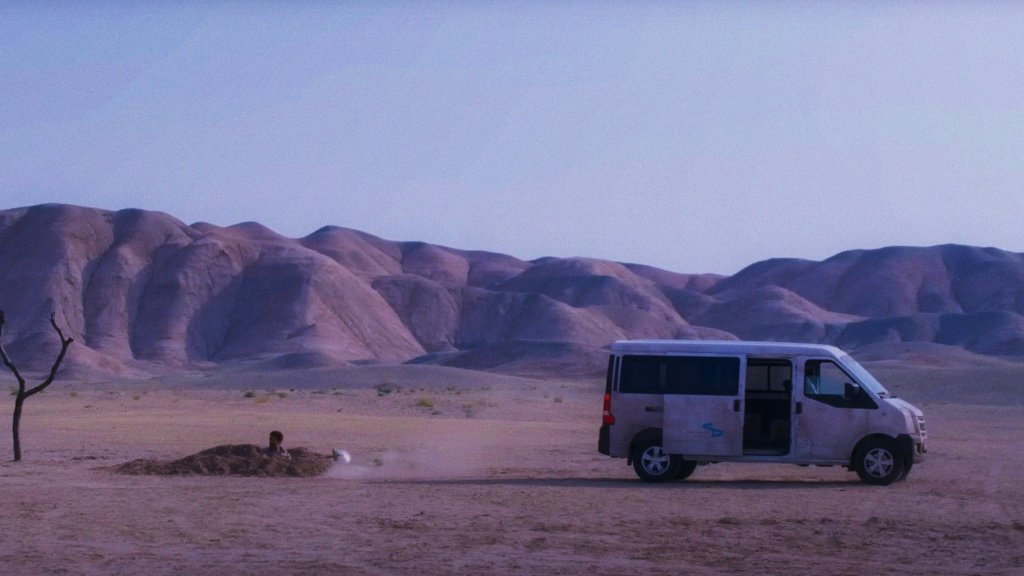
This was originally slated to be a NYFF review for me, but when Panahi was no longer able to enter the country due to government shutdown, I put off seeing it until VAFF where it became one of my favorites of the festival. I’d somehow never seen a Panahi film before this one, but I’d heard of his legend with films like This is not a Film and his other DIY illicit projects. But where last year’s Seed of a Sacred Fig was a dour film about authoritarianism and censorship, this film is a…. comedic film about authoritarianism and censorship?
It Was Just An Accident is centered around a man who was previously kidnapped who believes he’s found his government kidnapper and elects to return the favor by holding him hostage. When there’s doubt about whether it’s actually the government agent though, the film becomes a moral dilemma akin to the best of Farhadi. The tone balances between black comedy and bleak reality, but it remains a thrilling crowd-pleaser throughout the full runtime. A definite conversation-starter, it will almost certainly be in the Oscars conversation as Neon promotes it for Best International Feature.
Train Dreams (2025) dir. Clint Bentley
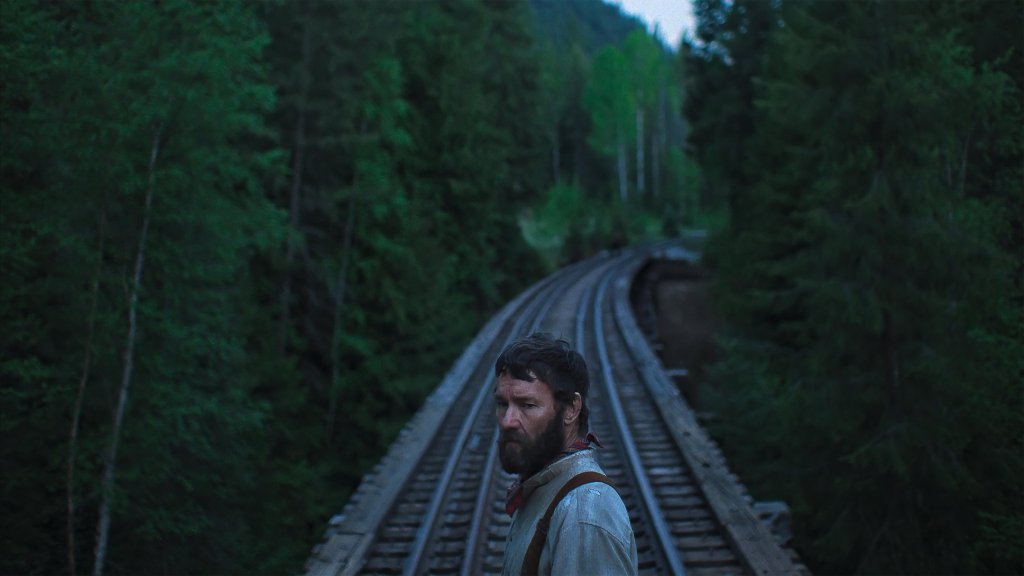
In a festival season full of films that “insist upon themselves” as they strive for importance (don’t get me wrong, I like most of those!), there’s a breath of fresh air in a film like Train Dreams. Train Dreams merely exists as a beautiful lowkey ode to times past. I’d read the book, so I knew I would probably like the film, but it seemed.. nearly unfilmable? It’s a bit like Faulkner’s Go Down Moses or Richard Peck’s A Long Way From Chicago where it’s a picaresque adventure through the death of the frontier and the continued march of modernity tied to the railroad. But turning that into a movie seemed difficult.
Somehow they managed to do it! Beautiful digital cinematography, a real “life is who you meet” message, and multiple nods to Terrence Malick led to this living up to my expectations. I know many who saw it with me were let down by the film’s slight-ness where it doesn’t really try to “say” anything large, but I view that as one of the film’s strengths as we focus on one lonely man’s experience in the early 20th century. Joel Edgerton kills it in one of his best leading roles, while William H. Macy and Paul Schneider are sure to please in their extremely specific characterizations. I came into this film already emotionally vulnerable, so the film left me misty-eyed, and I had several conversations on the drive home about the film’s effect on me. Though its Best Picture odds may be slim, it remains a unique film in this year’s awards season, and I urge you to give it a try if it comes to theaters near you or when it comes to Netflix in late November.
Mirrors No. 3 (2025) dir. Christian Petzold
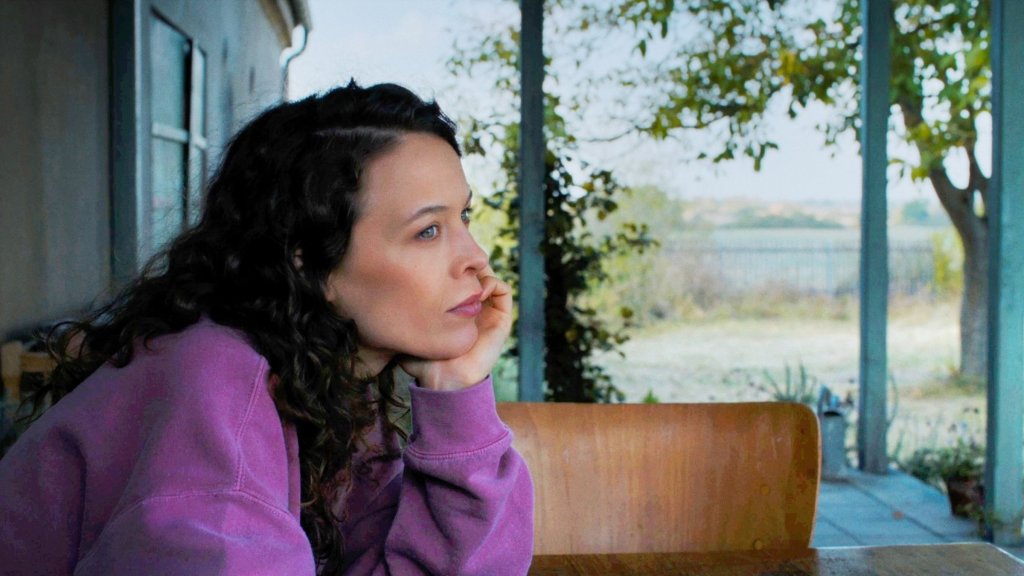
I’ve been a certified Petzold-head for a while. My first of his films, Undine, which I watched shortly after its release date a few years ago, was certainly a minor Petzold, but it affected me and left me thinking long after its runtime. Then watching Barbara, Afire, and Phoenix, which we’re screening at the University of Richmond next week, cemented him as one of my favorite working directors. Though most of his films are broadly Hitchcock homages, Petzold effectively conveys messages through images rather than dialogue, begging you to pull and tug meanings out of his pictures that aren’t immediately obvious. This understated style can be seen as a negative by some, but it leads to fantastic results. After his early 2010s “Nina Hoss” cycle, Petzold continues his “few small [Paula] Beer[s]” cycle here in Mirrors No. 3 where she effectively plays the lead role.
The film matches well with Phoenix as a Vertigo homage. Paula Beer as protagonist reminds a family of a lost loved one, so they dress her up and have her play the part from the past. But where others in the same subgenre like Alps or Mulholland Drive tend to blur the lines a bit more and give the viewer specific reasons for actions, Petzold doesn’t offer that same relief, so nobody’s motives or desires are especially clear. Though I wouldn’t recommend this as a first Petzold film (I think Phoenix or Afire would be my picks), I do definitely recommend watching it. Its award potential is minimal because of Sound of Falling, but it remains one of the better international features I’ve seen this year, so don’t miss it.
What’s Next?
Nov 13th: Phoenix at 7PM at the University of Richmond.
Nov 19th: Atlantics at 7PM at the ICA.
Nov 21nd: Tampopo at 7:30PM at Studio Two Three.
 Hard Light Cinema