Hey all,
This is Warner again, back from the boonies (visited my family in Arkansas and the campground didn’t have hot water lol), and here to give you an exciting sneak peak of our upcoming programming at Hard Light. This newsletter will start with a look at our upcoming screenings, several of which are just now being announced, followed by an exploration of Weimar Germany and the wonderful art that came out of it, and finally ending with a preview of this Friday’s film, Mädchen in Uniform.
- August Programming at Hard Light: Lubitsch, Good for Horror, and Leila and the Wolves
- Weimar Germany and its Film Impact – Warner West
- Mädchen in Uniform – Lewis Peterson
- What’s Up Next?
August Programming at Hard Light: Lubitsch, Good for Horror, and Leila and the Wolves

July is not yet over as we still have the 2nd in our loose-Weimar series, Mädchen in Uniform, coming up this Friday (July 25th) at 7PM at Studio Two Three. It’s a wonderful early Lesbian drama that’s a top 5 highest-rated film from 1931 on Letterboxd, beating out 1,811 others. Read more about it in the preview below before grabbing your ticket here.
This leads nicely into the last in our Weimar series and my personal staff pick, To Be or Not To Be, by Ernst Lubitsch on August 6th at 7PM at Studio Two Three. To those unfamiliar with Lubitsch, he was effectively the comedic version of Hitchcock before his untimely early death in the late 1940s of a heart attack. I’ll write more about it in my preview for the next newsletter, but this film is a boundary-pushing black comedy from the 40s that inspired Mel Brooks, Quentin Tarantino, Taika Watiti, Billy Wilder, and Wes Anderson and has been praised by multiple scholars as the greatest comedy ever. I realize it’s a weird date on a Wednesday but rather than overpaying at the megaplex, it would mean the world to me if you joined me for one of my favorite movies! Grab your ticket here.
That very next weekend, we have an exciting new double-feature to announce! After the success of our collaboration with our beloved Exposure Cinema, we’re excited to partner with another Richmond film staple Good For Her Films for another Sunday double-feature. On August 10th, we’ll be collaborating for a “Beat the Heat” pairing of Australasian spooky classics Heavenly Creatures and Picnic at Hanging Rock at Studio Two Three. It’s always a treat when we get to share audiences and show great movies so if you like Peter Jackson (Lord of the Rings trilogy, King Kong) or Peter Weir (Master and Commander, Dead Poets Society, The Truman Show), come and join friends to watch some of their feminist early work.
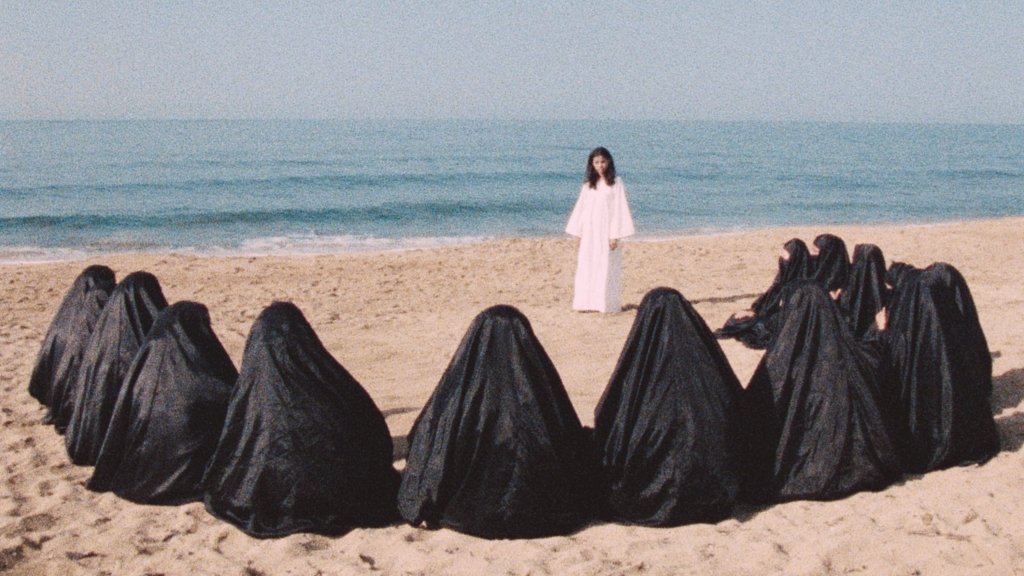
Finally, on August 22nd we’re excited to announce that we’re showing another new restoration, this time of the incredibly important 1984 nakba film Leila and the Wolves. We were connected with anti-imperialist film distributor, Several Futures, after our No Other Land screening, and we’re excited to get the opportunity to bring this movie to Richmond as an educational experience for our local community.
We’ll have ticket links, posters, and more details coming soon for these screenings, but we hope you go ahead and put them in your calendars and share with your movie-loving friends. It’s been exciting to see how our local film scene has grown and each one of you has been an important part of that.
Weimar Germany and its Film Impact – Warner West
So, like many of you, I knew the term “Weimar Germany” and couldn’t associate much with it aside from perhaps some vague facts from history class and a rough timeline. However, the actual details around the era cause it to become one of the most important times in film (and cultural!) history.
Weimar Germany is an era loosely located between 1918 (end of WWI) and 1933 (rise of Hitler in Germany) with several peaks and valleys throughout. It exists largely because of the end of WWI due to Germany’s surrender resulting in a social revolution and a new “Weimar” constitution being created. The combination of the horrors of war on the front (chemical and trench warfare) and the repression and censorship in the cities during the war led to a pressure buildup that was completely let loose with the new constitution.
It was a messy time with no clear path forward socially as a country, but the multiple grey areas led to both no real censorship at all in Berlin but also rising fascism throughout the country. Cabaret culture was created with this lack of censorship that allowed for an enormous openly-gay subculture to develop and expression in the arts to bloom. Germany didn’t allow any foreign films to enter the country, so German directors were necessary to carry the country culturally and names like Ernst Lubitsch, F.W. Murnau, and Fritz Lang rose to prominence at this time. And, with this new movie culture booming, Germany’s economy begins to collapse with their leadership printing currency faster than the people can spend it, so arts are at an unsustainable high. German cinema at this time is immensely popular with German directors often ranking among the top 10 amongst American film magazines, but the leftover traumas of war are looming in the margins.
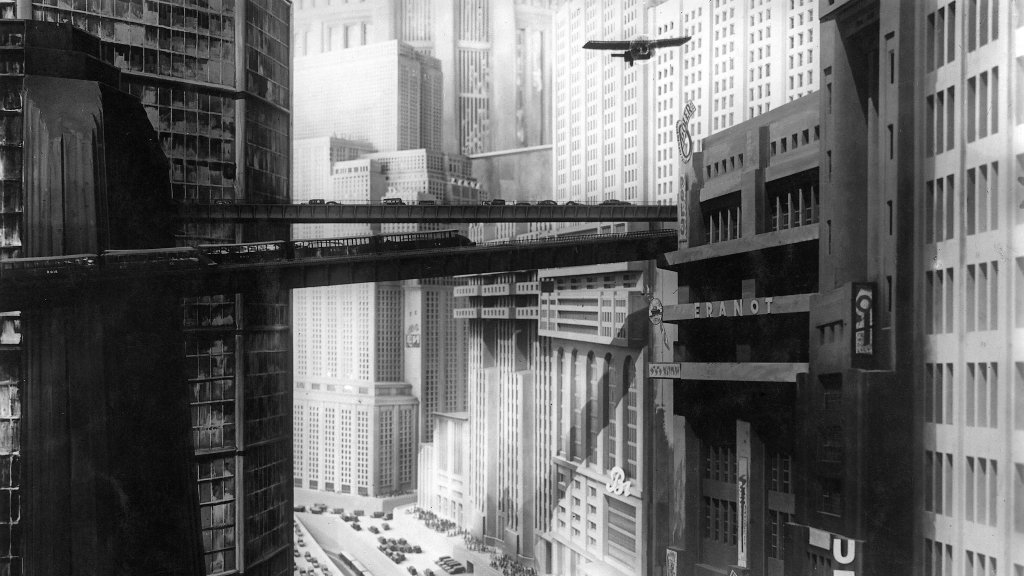
WWI’s monstrosities on the battlefield found its way back with artists into their cinema so the mangled bodies from trench warfare find their way as monsters into The Haunted Castle, The Man Who Laughs, The Cabinet of Dr. Caligari, and, of course, Nosferatu. The bio-warfare of chemical weapons leads directors to wonder what is possible scientifically and Fritz Lang creates a city of the future in Metropolis and takes his story to space with Woman in the Moon. But the worst impact of WWI may not have been seen on the screen but instead felt in German citizen’s hearts.
WWI didn’t just “end” but resulted in Germany signing the Treaty of Versailles which contained a “guilt clause” that made Germany effectively admit to being the cause of the war. While WWII was a little more black-and-white, many German citizens lost loved ones and felt they were just as much the victims of the war as any other country, so this victim complex began and festered for over a decade. These feelings combined with hate for the ruling party that crashed the economy led largely by Catholics, Jews, and Socialists. The three groups were blamed and often conflated, so when a leader came and attacked those groups WHILE playing upon their feelings of being victims, the power vacuum was quickly filled and the Weimar era ended.
So why these three films? Partly because we really liked them and wanted to tie them together thematically. Additionally, they all point to this era in a different way. Cabaret was created by Fosse from the source-text “Goodbye to Berlin” and is a retrospective look at the highs and lows of the era. Mädchen in Uniform comes from the end of the Weimar era and likely wouldn’t have been possible if it were made any later. The film has overt lesbian themes existing from the cabaret culture of the era that probably wouldn’t have been present in any American counterpart, but its producer Carl Froelich becomes a member of the Nazi party and a leading propaganda director only two years after its release. The ending of the film was changed in 1933 for German audiences by the Nazi party and multiple members of the cast and crew had to leave the country or risk death; some like assistant director Walter Supper died because his wife was Jewish. Finally, To Be or Not To Be is a pioneering anti-fascist and anti-Nazi movie, stemming from Lubitsch who left Germany in the early 1920s partially due to racism and was unable to return following the Weimar era. Lubitsch was stripped of his German citizenship by Hitler and was “literally” used as the face of “Jewish depravity” in propaganda film “The Eternal Jew” per Hitler’s request. His response was to punch back with To Be or Not To Be, a movie about artists fighting fascism.
So join us this upcoming Friday for Mädchen in Uniform and on August 6th for To Be or Not To Be for the next two parts of our Weimar series and keep your eyes peeled for more on Ernst Lubitsch soon (in both digital and print, hopefully!).
Mädchen in Uniform – Lewis Peterson

Chat, is the universal LGBT experience having a devastating school-related crush as a teenager? Moonlight, A Separate Peace, The Children’s Hour, Picnic at Hanging Rock, and Mädchen In Uniform suggest something to this effect.
We’ll be showing Leontine Sagan’s lesbian cult classic, Mädchen in Uniform, this Friday at Studio Two Three, as part 2 of our Weimar Germany series. It’s a story of unrequited teenage love trying to survive in an authoritarian school environment. Despite being banned by the Nazi party and absolutely reviled by Joseph Goebbels (kind of a compliment to be hated by one of the worst people to ever live), Mädchen in Uniform was able to find international success and became a favorite with American, British, French, Mexican, and Japanese audiences.
Manuela von Meinhardis, a young student whose mother is dead and whose father is away in the military, is a new student at an all-girls boarding school. The school is ruled in an authoritarian manner by Fräulein von Nordeck zur Nidden. Manuela isn’t meant for such a strict environment-nowadays we’d say she’s too much of a lovergirl. She notices that one of her teachers, Fräulein von Bernburg, has a compassion for the students that isn’t found anywhere else in the school. Drawn to this compassion, warmth, and kindness, Manuela falls for her teacher.
It’s a film that has a very frank and straightforward depiction of love between women, so I don’t want to spoil too much of how it goes. But it’s a fascinating time capsule, especially as an American-so many of our films from this time were censored by the Hays code, so queerness could only exist as a suggestion in Hollywood. So to see a film where young girls speak with such conviction about their love for other women and their hatred of authoritarian repression, and to know that it’s from Germany in 1931 does leave the viewer with a feeling of shock and scandal. Also worth noting is there are No Men present in this film. Too often we get caught up in the idea that queerness is a modern development. This is ahistorical, and prevents us from seeing the bigger picture: that there are societal moments where a fluidity of sexual and gender identities is encouraged, and often fascists seek to destroy those moments first and foremost.
If Cabaret is a film meant to look back on this time with a postwar lens, then Mädchen in Uniform can serve as a representation of this time, free of any hindsight. Even knowing that the film’s ending was censored and eventually the film was fully banned gives us an insight into how quickly things changed when the Nazi party took over. Leontine Sagan, who directed the film, had to escape Germany soon after this film’s release, as did many in the cast and crew. In this day and age, when we see censorship, authoritarianism, and homophobia on the rise, I think there’s a great deal to be learned from watching and reading about Mädchen in Uniform.
So join us on Friday, July 25th for this delightful movie and get your tickets here.
What’s Up Next?
July 25th: Mädchen in Uniform at Studio Two Three.
August 6th: To Be or Not To Be at Studio Two Three.
August 10th: Beat the Heat Double Feature with Good For Her: Heavenly Creatures and Picnic at Hanging Rock at Studio Two Three.
August 22nd: Leila and the Wolves at Studio Two Three.
 Hard Light Cinema