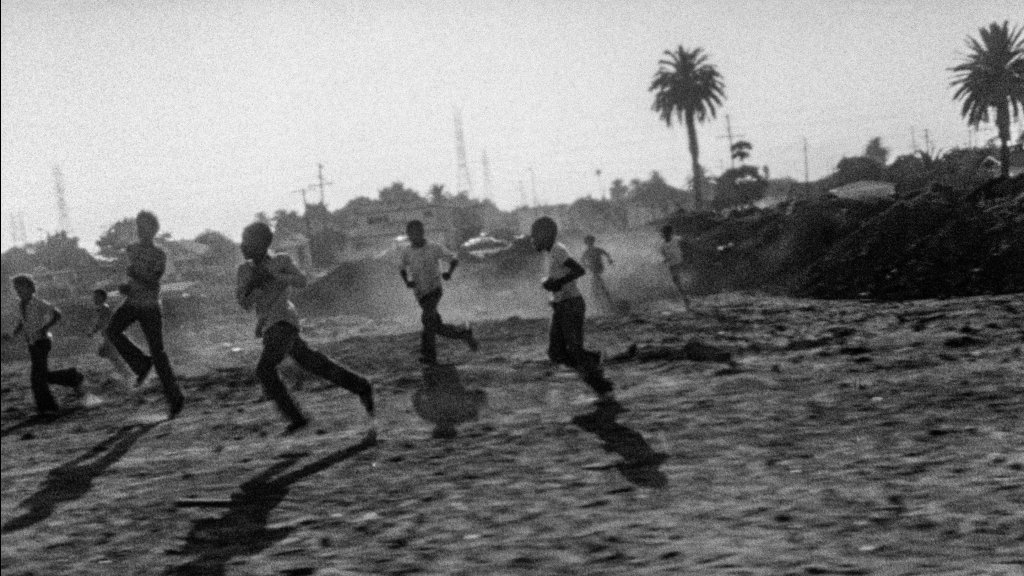
Hey all,
Excited to return with another Hard Light newsletter after an exciting Sunday night of shorts, led by Tongues Untied. Though our Pride Month screenings are over, we’re excited to put a preview spotlight on our July double-feature and give you some bonus Pride movies with reviews of some of our personal favs.
Our upcoming schedule is an exciting one. In July, we’ll have the start of a series on German cinema with our first two being a bit of a Weimar-pairing with Bob Fosse’s Cabaret on July 13th at Studio Two Three and Leontine Sagan’s Mädchen in Uniform on July 25th at Studio Two Three. We’ll have more German or German-adjacent cinema on the horizon, but we’re excited to launch the series with this pair. In addition to these rocking movies, we’re excited to partner with our good friends in Exposure Cinema for a “Beat the Heat” double-feature on July 20th at Studio Two Three of Charles Burnett’s Killer of Sheep and Zenabu irene Davis’s Compensation. We’re going to be pairing with some other screening groups and institutions in the next few months, but we’re excited to start our partnerships with Exposure because the programming and people both rock so much!
So in this newsletter, we’ll start with previews of the two films in our “Beat the Heat” double-feature partnership of Charles Burnett’s Killer of Sheep and Zenabu irene Davis’s Compensation on July 20th at Studio Two Three with Exposure Cinema. Following those awesome previews, we’ll give some of our own personal Pride Month picks so you’ll get a good watchlist of awesome queer movies for the rest of the summer, and then a quick “What We’re Into” to give you guys a catch-up on our personal lives <3
- Killer of Sheep (1978) dir. Charles Burnett – Kyle M-B
- Compensation (1999) dir. Zeinabu irene Davis – Guest Contributor Brandon Shillingford from Exposure Cinema
- Hard Light Pride Staff Picks
- Tommy Jenkins
- Sylvie Miller
- Fresh Kill (1994) dir. Shu Lea Cheang
- Liquid Sky (1982) dir. Slava Tsukerman
- Blue (2002) dir. Hiroshi Ando
- The Queen (1968) dir. Frank Simon
- Murmur of Youth (1997) dir. Lin Cheng-sheng
- The Bitter Tears of Petra von Kant (1972) dir. Rainer Werner Fassbinder
- Flaming Ears (1992) dir. Ursula Pürrer, A. Hans Scheirl, Dietmar Schipek
- Lewis Peterson
- Warner West
- What We’re Into: June 23rd Edition
- What’s Up Next?
Killer of Sheep (1978) dir. Charles Burnett – Kyle M-B
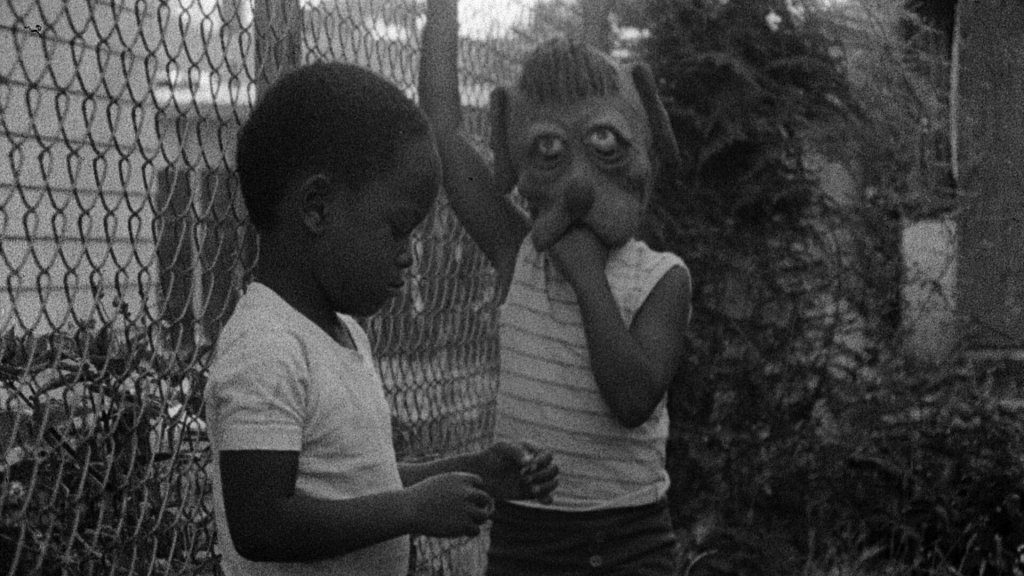
Released in 1978, Charles Burnett’s Killer of Sheep was a landmark accomplishment in the development of African-American life on screen. Up to this point, depictions of black stories on screen were mostly relegated to being directed by white directors, which caused their authorial voices to largely overshadow Black life. The first film to be directed by a black person for any of the major studios wouldn’t happen until Gordon Parks in 1969 with his film The Learning Tree. Burnett however operated outside of this Hollywood film-making structure. Using grant money from the UCLA Film School, Burnett shot the film over the course of weekends in 1972 and 1973 with some additional shooting in 1975. The film would be submitted as his thesis film for his Masters of Fine Arts. The film was also made within a consistent group of collaborators that would come to be known as the L.A Rebellion, a movement of black filmmakers from the UCLA film program who sought to create work that aligned with and depicted the lives of black people as they saw them.
Despite winning the critics award at the Berlin International film festival, seeing Killer of Sheep would be a massive struggle for most given a series of complications with access. First of which was the costly music-licensing costs that prevented the film from being properly distributed due to Burnett not clearing the music in the film. It would exist in various forms of 16mm prints up until it received a DVD release in 2007, but even then the limited release of the film was limited.
The persistence of the film is truly one to marvel at as now a beautiful restoration through Janus Films allows us to bring the film to you all with the original soundtrack intact. Now a true masterwork can be seen and appreciated for its genius without any caveats, its tender depiction of life in 1970s Los Angeles still resonates today, despite the issues plaguing marginalized communities related to poverty, employment, and education still persist. We hope you can join us at Studio Two Three on July 20th for our Double Feature “Beat the Heat” program with Exposure Cinema for a showcase of this spectacular film alongside fellow L.A Rebellion Filmmaker Zeinabu Irene Davis’s 1999 film Compensation. Doors will open at 6pm and we hope to see you there.
Compensation (1999) dir. Zeinabu irene Davis – Guest Contributor Brandon Shillingford from Exposure Cinema
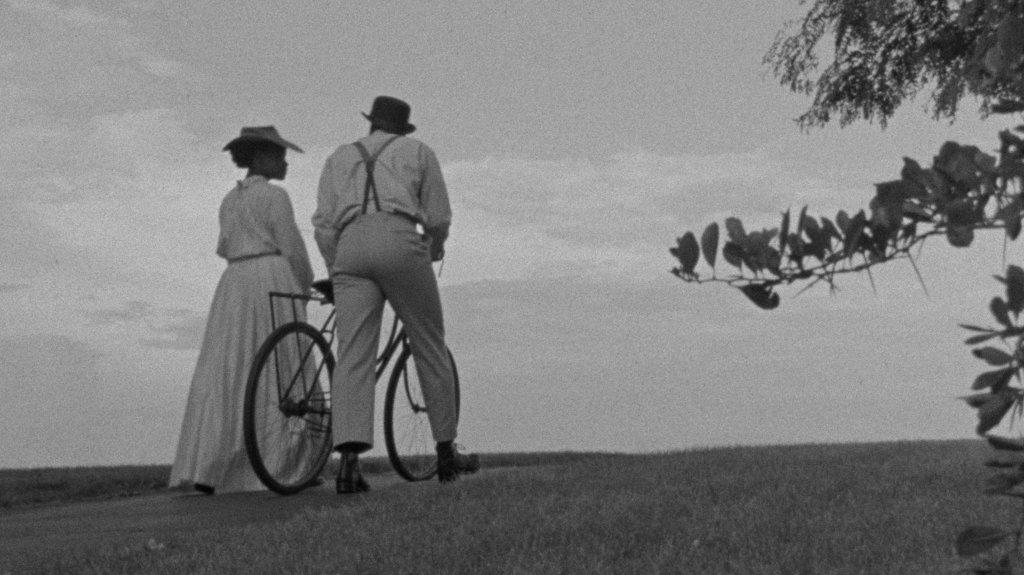
Taking its name from a poem by Paul Laurence Dunbar, Compensation traces two parallel love stories set in Chicago at opposite ends of the 20th century. In 1910, Malindy Brown, a deaf seamstress, falls for Arthur, a hearing laborer recently arrived from Mississippi. In the 1990s, another romance unfolds between Nico and Malaika (both couples portrayed in dual performances by Michelle A. Banks and John Earl Jelks) echoing and diverging from one another in beautiful and tragic ways.
Deeply felt and sprawlingly intimate, Zeinabu Irene Davis’ Compensation is both a relic and a reckoning, a film that speaks the past in a language at once familiar and foreign. It acts as a profound bookend to a century marked by terror and tenderness, by heartbreak and transcendent love, and as a culmination of a cinematic movement sparked by filmmakers like Charles Burnett, Haile Gerima, and Jamaa Fanaka, and carried forward by Davis, Julie Dash, Billy Woodberry, and countless others.
Davis’ film is in conversation not only with the history of the diaspora across the 20th century and beyond, but with the moving image itself, its power to preserve and enshrine, while also flattening and abstracting the context of our arrivals, departures, dialogues, and becoming. In this way, Compensation offers more than narrative: it becomes a guiding hand through the blank pages and silences of history. This film is one of my favorites of all time and is a vital piece of the American independent filmmaking canon. A work of staggering emotional depth and spiritual clarity, it wrestles with the burdens we inherit, those that keep us from joy, love, and communion, while offering something enduring, warm, and radical in return.
Hard Light Pride Staff Picks
Tommy Jenkins
I Don’t Want to Sleep Alone (2006) dir. Tsai Ming-liang
After collapsing on the streets of Kuala Lumpur, a character credited only as “Homeless Guy” (played by Lee Kang-sheng and assumedly a variation on Lee’s repetitive role as Hsiao-kang) is taken in by a man named Rawang and nursed back to health. Both men are immigrants to Indonesia: Hsiao-kang is from China, Rawang is from Bangladesh. As Hsiao-kang convalesces in Rawang’s makeshift home—a hard concrete bunker tucked away in the remains of an abandoned, half-flooded skyscraper, shared with a community of other migrant workers from around the world—an intense intimacy grows between them. A third character, an embattled maid whose story is at first seemingly unrelated to that of the two men, begins to complicate the tender, caring relationship they have developed. What I love about this film is how its slow-cinema style works so well to depict the beautiful care people provide to one another in this world, and to explore ambiguous territories between true love, caretaking, selfless altruism, jealous possessiveness and displaced rage. Tsai’s slow-burn drama culminates in a searing climax of frayed emotions and surreal imagery that reformulates the potential ecstasies and hazards of queer love into a dreamlike ideal.
Macho Dancer (1988) dir. Lino Brocka
Some queer media is delicate and subtle, relying on subtext and intrigue that shrouds non-heteronormativity in a haze of implications and inferences to be decoded by the knowing viewer. Then there’s Lino Brocka’s Macho Dancer, which does none of that. Brocka’s film, a gay cinema classic of the Philippines, follows a provincial young man named Pol who becomes a stripper in Manila to support himself and his family when his lover, an American soldier, returns overseas. The film gives as much weight to showing ugly political, economic and social injustices Pol and his fellow sex workers encounter as it does to long, literally and figuratively soapy montages of their onstage performances. It is a mind-bending fusion between Brocka’s signature prestige melodramas that examine social problems of the Philippines and the broader Filipino genre of bomba films, which feature excessive sex scenes and are softcore porn adjacent. In his book Martial Law Melodrama: Lino Brocka’s Cinema Politics, Brocka scholar Jose Capino gives an insight that helps elucidate the seemingly disparate tones of Macho Dancer, describing what he believes to be a spurious distinction critics usually draw between two types of Brocka films: his high-budget, socially relevant prestige films, with which the director garnered international recognition, and his populist, purportedly “escapist” films, which are thought of as duds that don’t reach the same heights. To me, Macho Dancer is proof that the distinction is false, and that you can truly have it both ways; cinema can revel in fantasies while conveying revolutionary ideals.
Sylvie Miller
There are many pride films I could write about, but that could go on forever. Instead I’ll give a few recommendations. Some are explicitly queer, while others are more subtle or explore gender identity. There’s a few I wanted to add but we just might be screening them so I’ll keep it a secret for now ;) I hope you can find something new to love!
Fresh Kill (1994) dir. Shu Lea Cheang
Liquid Sky (1982) dir. Slava Tsukerman
Blue (2002) dir. Hiroshi Ando
The Queen (1968) dir. Frank Simon
Murmur of Youth (1997) dir. Lin Cheng-sheng
The Bitter Tears of Petra von Kant (1972) dir. Rainer Werner Fassbinder
Flaming Ears (1992) dir. Ursula Pürrer, A. Hans Scheirl, Dietmar Schipek
Lewis Peterson
The Watermelon Woman (1996) dir. Cheryl Dunye
Cheryl Dunye’s feature film more than earns its reputation. For most of my life, I’ve lived a butch and/or transmasc existence, and we’re always the butt of the joke. This movie always holds a special place in my heart because that is Not the case. Just a butch, her butch friend, and their experiences navigating life, dating, employment, all while trying to live their artistic truth (and even discover what that means for them!). It’s so nice to see us without the cruelty present in so many movies. Cheryl’s quest to preserve black lesbian history in cinema is what elevates this to masterpiece level. What starts off as a slice-of-life 90s indie film becomes an examination of film history, and the prejudices underlying what is included and excluded from the canon. It’s funny, it’s sexy, the fashion is soooo cool, and by the end you’ve gone on a journey of self discovery along with Cheryl Dunye’s character. I just think it’s fabulous.
The Bitter Tears of Petra von Kant (1972) dir. Rainer Werner Fassbinder
Nobody knows how to portray toxic love quite like Rainer Werner Fassbinder. A complicated bisexual in his own life, he gave audiences this wicked chamber drama about obsession, transactional “love”, and insecurity: and we are all the better for it!!!! I support gay rights and gay wrongs! and it features some of the best wigs ever put on the silver screen.
Happy Together (1997) dir. Wong Kar-Wai
I’m not the only one in hard light who loves this film, and with good reason. It’s one of my favorite films ever made. Many a joke has been made about gays who U-Haul-but as someone whose done it to disastrous effects, I can attest that this is one of the more realistic depictions. Tony Leung and Leslie Cheung will break your heart as the couple that can’t get it right, and Chang Chen’s role as the young man who isn’t brave enough to consummate his feelings is such a tender (I know it’s overused) performance. It’s so good. One of Wong Kar-Wai’s finest!
My Beautiful Laundrette (1985) dir. Stephen Frears
This is a movie I discovered as a teenager and watched on youtube if you can believe it! 2010 was a different time. When Criterion announced they were putting out the remaster back in 2015, I was leaping for joy. It’s a deceivingly complex film, about immigration, Thatcher-era England, racial tensions, familial expectations- but at the center of it is a sweet romance between Omar, a first generation Pakistani immigrant, and Johnny, a former skinhead who is realizing that nihilistic hate movement has nothing to offer himself or anyone. The two carve out a space for themselves by running a laundromat, which functions as a sanctuary of sorts from the hellish conservative culture of London. It’s a really lovely movie, one that I wish more people would see!
The People’s Joker (2022) dir. Vera Drew
If you’re trans you should watch this! That’s all.
Warner West
Midnight Cowboy (1969) dir. John Schlesinger
A bit of a weird Pride pick by a straight man in the 2020s, but I promise the text is way deeper than just counter-culture or Easy Rider (which I conflated with this one). Directed by Schlesinger, a gay man who also nailed the throuple film decades before Challengers in Sunday Bloody Sunday, this one surprised me as one of my favorite New Hollywood films.
Rebels of the Neon God (1992) dir. Tsai Ming-liang
Not my favorite Tsai film, but certainly his easiest entry-point. Real lonely yearning-cinema which tends to be my thing. The phone-booth scene wrecked me.
The Power of the Dog (2021) dir. Jane Campion
I mean, Campion is a great, and this one was my entry-point to her oeuvre. I watched this before Brokeback which may have impacted how much I love it, but I still find it just such an easy watch. Buy the Criterion (skip the Netflix!) during the next sale and give this one a watch!
Portrait of a Lady on Fire (2019) dir. Céline Sciamma
Another absolute classic. My favorite author is Henry James, so I’m a huge fan of complicated period-piece relationships. I also wrote my thesis on ekphrasis (basically, written depictions of art) in Wilde, so this story about an artist also really works for me. The ending is possibly my favorite in all of cinema, and it always takes my breath away and brings tears to my eyes.
Y Tu Mamá También (2001) dir. Alfonso Cuarón
I’m not going to spoil this one too much, but it’s easily my favorite Cuarón film and has grown to be one of my all-time favs. Watch it in your early 20s with your pal, watch it in your 30s alone (or also with your pal!) <3
What We’re Into: June 23rd Edition
Tommy Jenkins
Tommy has been into:
-I have been loving Exposure Cinema’s “In Bloom” series at the ICA! My favorite movie they’ve shown so far has been Peppermint Soda (1977), a beautiful first film from Diane Kurys that opens burning relational, traumatic, sexual and political questions of girlhood and adolescence for the audience to consider. I’m very excited to finally see Return to Seoul (2022), the final movie in the series, this Tuesday!
-I’ve also been dipping my toes into some fun experimental cinema via landscape filmmaker James Benning, and the essay(ish) films of Arthur Jafa and Deborah Stratman. My favorite first time watch of the month so far has been Michel Khleifi’s pseudo-documentary Fertile Memory (1980), reportedly the first full-length film ever shot within the “Green Line” of Palestine’s West Bank, which focuses on two Palestinian women whose sharply contrasted perspectives and life experiences create a dialogue on the state of the country and prospects for its future.
-As usual I have also been listening to a lot of mostly unserious music, including:
-Normal Pleasure – Melbourne’s Dead!! (A really fresh brain-itchy house album)
-Fuerza Regida – Del Barrio Hasta Aquí, Vol. 2 (I love the tuba player in this band so much wow)
-xaev – TO-THE-CORE_153BPM (Solid good-vibes-only 2000s pop megamix)
-gingus – Giratinightcore: Yellow – EP (nine minutes of music that would instantly kill a Victorian child, or anyone who takes themself too seriously)
Sylvie Miller
Sylvie has been into:
-Breaking generational curses
-Putting mango in my oatmeal
-Trying to tackle as many films as possible while on bed rest
-I recently watched Kamikaze Girls and loved it so much
-Listening to a lot of Nico, Imogen Heap, Lingua Ignota, and Ludus
-Cancelling all my streaming services and going to local screenings instead
Lewis Peterson
Lewis has been into:
-realizing it was Emily and not Charlotte Bronte who wrote Wuthering Heights and enjoying this whack a doodle tale as it unfolds (the Kate Bush song makes so much more sense now!)
-coming home after vacation and realizing just how much I love Richmond, my friends, my family, and my dearly beloved cat ricotta
-the ultimate in flight movies, Ocean’s Eleven and Ocean’s Twelve
-American coffee. even diner coffee. idk why italians are roasting coffee so dark. does anyone want to tell them it’s bad, or?
-monologue documentaries, like Tongues Untied, Heart of a Dog, or Sans Soleil
-summer produce!!!! cucumbers! canteloupe! zucchini! and soon tomatoes!! all the stone fruits!!!! they help me make peace with the brutal heat
Warner West
Warner has been into:
-His OKC Thunder which finally won the NBA championship. I’ve been a fan since 2010 and watched every game since 2016, so I’ve seen a lot of heartbreak over the years, and this championships truly means so much to my little sports heart.
-Zorch Pizza (see OKC Thunder game)
-Volcano Sauce from Aslin Beer Company (see OKC Thunder game)
-that awesome new Hotline TNT album (for when I need to mute the OKC Thunder game)
-Also, Lav Diaz’s Melancholia which I watched for 8 hours on Thursday and have spent approximately 80 hours thinking about since then.
Jay Wilson
Jay has been into:
-Patio beer and ’70s live records on the JBL (playlist)
-Evening bath with the Beach Boys’ yacht rock record, 1979’s L.A. (Light Album)
-“Inner child work” (watching Holes over grilled cheese and tomato soup)
-Doing what you’re supposed to do when you’re supposed to do it (watching Moneyball on a plane)
-sunshine 🌞
Jack Wolfe
Jack has been into:
-Rewatching Mad Men so S4E8 lands on the first day of summer
-Bringing my camera with me as often as possible
-The new “Archbishop Harold Holmes” music video featuring John C. Reilly
-Getting ready to move and the excitement that comes with reorganizing all of my stuff
-Homemade ice cream and sorbet all summer
-The new weekly boss rotation on Elden Ring Nightreign (ouch)
What’s Up Next?
July 13th: Cabaret (1972) at Studio Two Three
July 20th: Beat the Heat Double-Feature w/ Exposure Cinema: Killer of Sheep (1978) and Compensation (1999) at Studio Two Three
July 25th: Mädchen in Uniform (1931) at Studio Two Three
 Hard Light Cinema