
Welcome back to the Hard Light newsletter! In this edition, we’ll be giving you an extended preview of our next movie, You Burn Me by Matías Piñeiro at Afterglow on March 28th, followed by a special rundown of some of our staff picks for our favorite movies of 2024. Though some may already be creating a short list of the best of 2025 (trust me, we’ll have a review of Mickey 17 coming your way soon!), it’s never too late to watch some great movies from last year, some of which are just now coming to streaming for you to watch at home.
- You Burn Me (2024) dir. Matías Piñeiro – Warner West
- Best of 2024: Hard Light Staff Picks
- All We Imagine as Light (dir. Payal Kapadia) – Tommy Jenkins
- Eno (dir. Gary Hustwit) – Jack Wolfe
- I Saw the TV Glow (dir. Jane Schoenbrun) – Deirdre Bouquet
- La Chimera (dir. Alice Rohrwacher)/The Beast (dir. Bertrand Bonello) – Lewis Peterson
- Nickel Boys (dir. RaMell Ross) – Kyle M-B
- Oh, Canada (dir. Paul Schrader) – Warner West
- What’s Up Next?
You Burn Me (2024) dir. Matías Piñeiro – Warner West
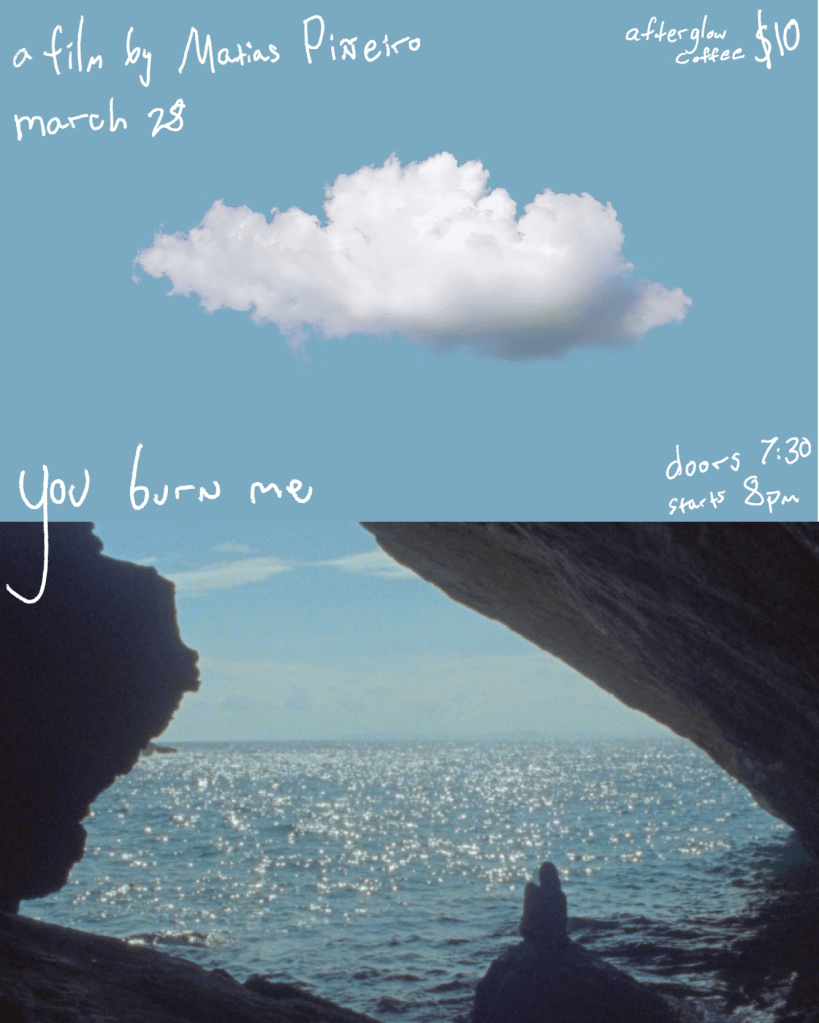
“Smiling means living like a wave, like a leaf, accepting your fate. It means dying in one form and being reborn in another. It means accepting- accepting oneself, accepting fate” -Britomart
You Burn Me is a narrative about the poetess Sappho conversing with the nymph Britomart about awful men from their pasts, womanhood, and their lives. But when you watch this film, I strongly encourage you to not focus only on the narrative because it’s so much more than just a recreation of a lesbian dialogue (though absolutely come through for that!). A true formal masterpiece, You Burn Me finds itself somewhere between Vladimir Nabokov’s Pale Fire and the films of Mark Jenkin. Nabokov’s Pale Fire (or I suppose Danielewski’s House of Leaves could be cited as a comparison) has a surface tale, but the true beauty lies in the footnotes, marginalia, and subtext that the author has crafted; this movie similarly uses footnotes, parenthetical asides, and lyrical imagery to recreate and add layers to the original text in a way that I’ve never seen in film before. Though many films can use metaphorical imagery as a leitmotif which it can nod to later, Piñeiro’s work evokes the Cantos of Ezra Pound as it creates full poems using images that have a verbal signified tied to each scene. It sounds complex, but the film washes over you like a gorgeous visual melody.
These unique images are undoubtedly tied to Piñeiro’s use of his 16mm Bolex camera which adds a rustic feel to his films. If you’ve seen the work of Mark Jenkin (Enys Men and Bait are both a real treat), you may be familiar with the crackling authentic feel that comes from this type of cinematography, and I can already tell the atmosphere at Afterglow will be perfect for this intimate type of film-making.
So join us at Afterglow Coffee at 8PM (7:30 doors) on March 28th, invite some friends, buy some wine, and find a seat for the special one-night Virginia premiere of a truly unique movie.
tickets | more info
Best of 2024: Hard Light Staff Picks
All We Imagine as Light (dir. Payal Kapadia) – Tommy Jenkins

Payal Kapadia is one of the most exciting new filmmakers this century as evinced by her second film All We Imagine as Light winning the Grand Prix at the 2024 Cannes Film Festival. It continues the style of her debut film A Night of Knowing Nothing, fusing documentary with fiction. Her debut was primarily a documentary about anti-Modi student activism that incorporated fictional letters from an unknown student named L. to create an emotional narrative. The newest offering from Kapadia is the inverse; it is a fictional narrative infused with documentary elements that tells the story of various women living in Mumbai and their struggles with romance, class conflicts, and companionship.
The introduction of the film is exemplary of Kapadia’s style: it begins with a long side-mounted car shot of a busy Mumbai street, the sidewalk lined with vendors and pedestrians. Voices give testimonials about their experiences in Mumbai; a man tells of leaving his rural home after fighting with his father to live with his brother, a dockworker; a woman describes becoming a domestic servant for a wealthier lady in the city. As they speak, melancholic images of crowded transit queues and throngs of people entering and exiting the subway glide past. Such images of transportation, especially the subway, are a motif of the film.
“Every person in the village had at least one person in Mumbai. In Mumbai, there is work and money. Why would anyone want to move back?”
After this meditative introduction, the film begins to ease into its fiction narrative. We are introduced to Prabha and Anu, two Malayali nurses working at a local hospital. Prabha tends to a patient who trepidatiously recounts seeing a vision of her deceased husband while watching TV. We learn that Prabha, herself, has, in a different way, lost a husband: he’s been working overseas for years and doesn’t contact her. Meanwhile, Prabha’s younger roommate Anu, another nurse at the same hospital, has her own problems with love. Her relationship with her Muslim boyfriend must be kept secret from her parents and the close-knit Hindu community to which she belongs, and her struggle to navigate this becomes a central part of the story. The way the film explores these conflicts is so touching and makes it one of the best of 2024. All We Imagine as Light is a must-see for those who appreciate nuanced romances and stories that highlight the intersections of reality and fantasy.
All We Imagine as Light is streaming on the Criterion Channel.
Eno (dir. Gary Hustwit) – Jack Wolfe

What if every time you watched a film, it had something new for you to see and learn about? Gary Hustwit’s ENO makes that possible with its approach to what Hustwit has dubbed the first “generative documentary.” Inspired by Brian Eno’s “generative music,” Hustwit saw no other figure more fitting for this new format of filmmaking than Mr. Eno himself. Quite literally a marvel of technological advancement, this film contains over 30 hours of interviews, and 500 hours of behind the scenes footage, along with other clips of Mr. Eno. There are estimated to be around 52 quintillion possible versions of the film.
I had the privilege to attend two screenings of this film, and both times left feeling incredibly inspired by the things Brian talks about and the processes of this film coming together, quite literally, in front of your eyes. There is a scene where Brian equates his work with generative music with his love for gardening: like planting a seed and watching it grow into something completely different. I do feel that it is important that I clarify this film does not use “generative AI.” It instead uses generative algorithmic software to take a point in the film and branch out to other related scenes. There is even a hardware version of the software, created by none other than Teenage Engineering, named the Brain-1 (or B-1). The film feature a handful of “tentpole” moments for it to construct its narrative around, but you will see the code working in real time between some of the scenes. I will continue to keep my fingers crossed for them to sort out how to distribute this film to larger audiences than single screenings, but it’s not an exaggeration to say that this film is one of the most unique cinematic experiences that you can have.
I Saw the TV Glow (dir. Jane Schoenbrun) – Deirdre Bouquet
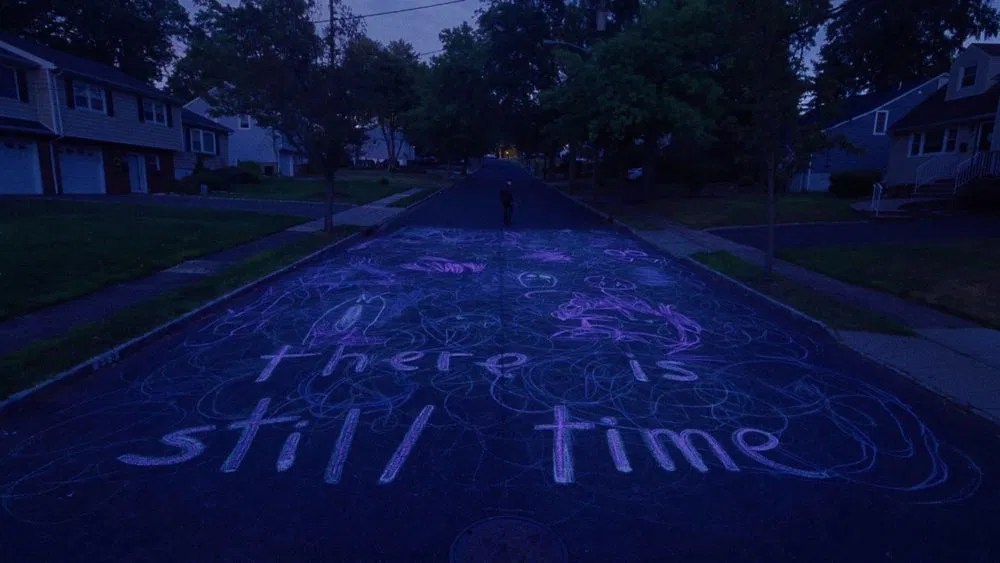
“What if I was someone else? Someone beautiful and powerful,” Owen, the protagonist of I Saw the TV Glow, says, pleading to the audience. I knew that feeling well, a deep pit of yearning for someone neither myself nor someone else, a shadow composed of unspeakable need that lingered on the edge of consciousness — something beautiful and powerful.
You know those rare pieces of media that puts into words incoherent feelings that have been infesting your head for as long as you can remember? I Saw the TV Glow was a movie of revelations for me, so much so that I was stuck somewhere between sobbing and panicking for the latter half of the movie. It didn’t trigger my transition, but it did clarify it. What makes I Saw the TV Glow special isn’t that it’s a trans story. It is a trans story that actually centers trans subjectivity rather than cis perspectives. It speaks to us in our own memories and feelings, with a certain disregard for accessibility for cis audiences.
I Saw the TV Glow shows transition as an agonizing process and one that rarely results in an easier life. Owen says “It feels like someone… took a shovel and dug out all my insides. And I know there’s nothing in there, but I’m still too nervous to open myself up and check.” Dysphoria, for Owen and myself, feels like: existing alongside the rest of the world not within it, lived experience lacks definition, time is warped in seemingly-malicious ways, desire is tinged with self loathing. Dysphoria is not a single point of tension with the self. It is a discordant note that spreads through the body like an infection. Transition here isn’t shown as a panacea but it is something real, a vivid interlacing of agony and bliss bursting through the muted unreality of Owen’s and Maddy’s world. I’ve yet to see another movie that captures both the ambiguities and beauty of this experience. I Saw the TV Glow feels like a challenge for a different sort of popular trans representation. Hopefully others answer.
I Saw the TV Glow is streaming on HBO Max.
La Chimera (dir. Alice Rohrwacher)/The Beast (dir. Bertrand Bonello) – Lewis Peterson
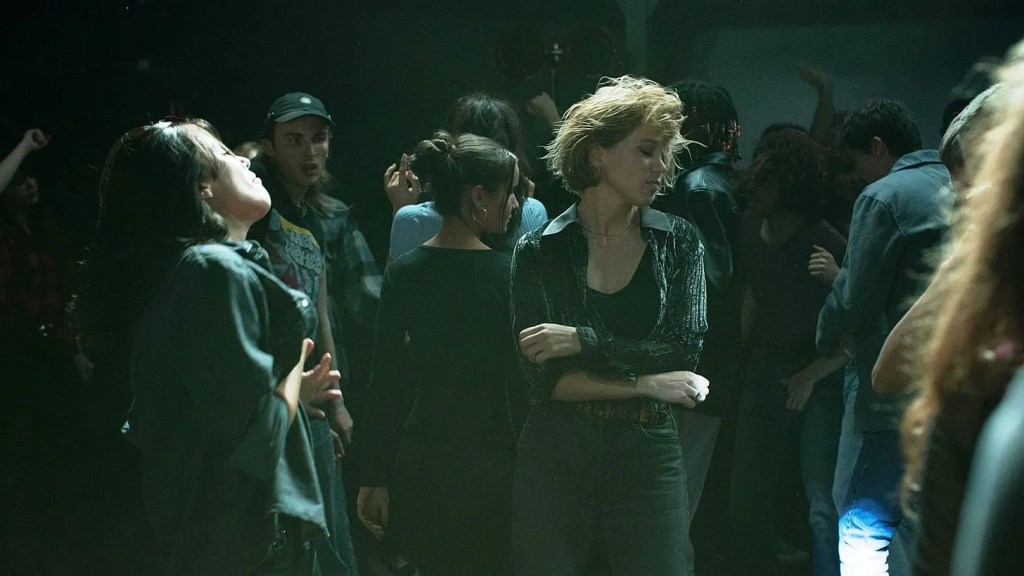
European Arthouse is not exactly the cutting edge of cinema that it was in the 1950’s and 1960’s. Gone are the days of the low budget films about loners wandering European cities and countrysides while experiencing an existential crisis of sorts that can only be explored with cinematic techniques like voice over, editing, and format changes through the use of archival footage, paintings, or different aspect ratios. Everything comes in waves, and there will surely be another wave sometime for European Arthouse to be as en vogue as it once was. Until then, fans of that school of filmmaking can take solace in two excellent films from 2024: Alice Rohrwacher’s La Chimera and Bertrand Bonello’s The Beast. While they have plenty of differences, both films managed to scratch the itch that some of us have from spending time in collegiate undergrad film courses. One is an original story, the other an adaptation. One is anchored by a leading man in a breakout performance, the other is anchored by a leading lady who is an established star on the domestic and international stage. Both were absolute joys to watch.
Alice Rohrwacher came to prominence with her film Happy As Lazarro, and she’s consistently been making some of the most wonderful films of her age group. Comparisons to Varda are not unwarranted—her films seem to exist in a similar world of magic, whimsy, and dark humor. Josh O’Connor (heart eye emoji!!!!) stars as Arthur, a fresh out of jail Tombaroli (a grave robber of Etruscan tombs) who is trying to recover from the loss of his wife. I mustn’t say any more, because the tale that Rohrwacher presents her audience with is genuinely magical. If you enjoy magical realism and the Giulieta-Masina-led Fellini films, you’ll get a kick out of La Chimera. What elevates this film for me is the cinematic techniques Rohrwacher giddily applies to her tale: we have ever-changing aspect ratios to represent different realities or views of the action (some are the camera’s eye, some are Arthur’s eyes, some are the omniscient force clueing the audience into the bigger picture); we have sped up frame rates; we have inexplicable Kraftwerk needle drops; exposition delivered by song and editing montage. It’s impossible to be bored by La Chimera. I saw it three times in theaters, because I was so bewitched.
The Beast is something I regret not seeing in theaters—it’s an adaptation of Henry James’ short story “The Beast in the Jungle”, and it stars Lea Seydoux as the gender-swapped self-inserted Henry James character. Seydoux plays Gabrielle, who is plagued by a sense of foreboding that she simply cannot shake. This inescapable feeling of inevitable doom takes over her entire life, ruining her relationships with others. Bonello has chosen to expand James’ short story by having Gabrielle and her love interest (George Mackay, a respectable foil to the effortlessly iconic Seydoux) meet each other across lifetimes. We see Gabrielle in 1910, in 2014, and in 2044. She is trying to “cure herself” through a scientific process of “purifying her DNA” and removing all heavy emotions from herself.
I chose these together because, while they are achieving different things, I think they are going about them in similar ways. La Chimera is in an unspecified time and uses magical realism, while The Beast is tied to specific times and utilizes sci-fi and horror techniques to place the viewer in Gabrielle’s emotional world. Arthur is desperately trying to escape his past, and Gabrielle is desperately trying to escape her future. Both films play with aspect ratios and filming formats to establish different perspectives/time-periods/realities. I would encourage anyone with a voracious appetite for arthouse cinema to give these a view.
You can catch La Chimera in theaters at the upcoming University of Richmond’s Italian Film Festival on March 23, or you can stream it on Hulu. The Beast is streaming on the Criterion Channel.
Nickel Boys (dir. RaMell Ross) – Kyle M-B
Back in 2016, the day after Trump was elected, I found myself in my dorm room watching Spike Lee’s 1989 masterpiece Do The Right Thing. It immensely affected me at the time, as feelings of uncertainty and anger were laid bare to me in a film that felt like the perfect encapsulation of a rage and sorrow that I could not fully express for myself. Eight years later and the day after a Trump inauguration, as well as Martin Luther King Day, I found myself in a theater to see RaMell Ross’s second feature Nickel Boys, a film that shifted that anger and sorrow to that, not only of a time, but of a history.
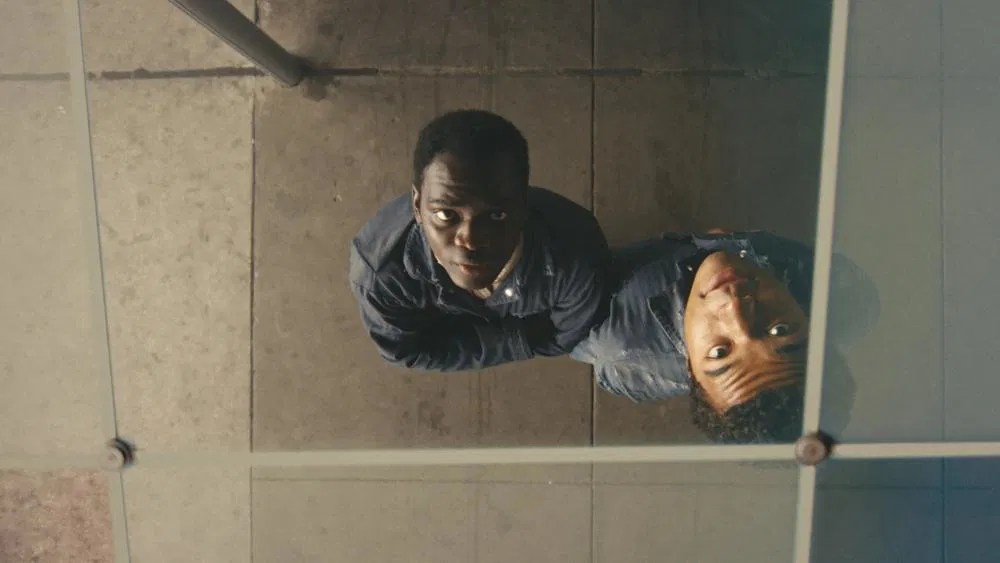
The film immediately places you into the body and mind of its characters. By being filmed entirely in POV, you experience the world as the characters do—directly cemented into their experience and thus the experience of what it feels to be othered and treated within a subhuman manner. The film takes what could have easily been a gimmick or cheap way to distinguish the film from other existing works and makes a cinematic language all its own. By shifting the lens of the story, Ross focuses the experience of racism as not only a societal issue, but on how it directly affects basic human life individually. Its characters do not get taught racism, they reflect and experience it. Its ambitions are worn proudly without any kind of boisterous proclamation: everything is in service of the story and the truths of these characters.
It’s often hard to pinpoint when you know a film is a masterpiece or will be considered a classic, but with Nickel Boys it feels like an inevitability. Its tenderness and approach to depicting black life shines like a beacon in a film landscape that continually seems to relegate black stories to that of an afterthought.
Nickel Boys is streaming on MGM+.
Oh, Canada (dir. Paul Schrader) – Warner West
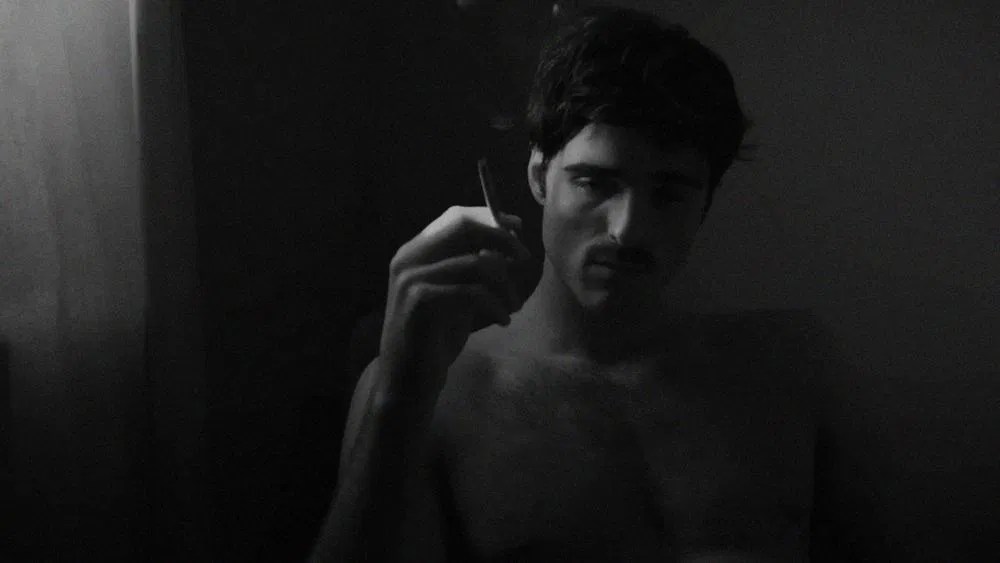
Paul Schrader kickstarted his film legacy as a twenty-four-year-old with his publication of “Transcendental Style in Film,” a short work of theory covering the work of Bresson, Dreyer, and Ozu. He then modeled his career on their styles, creating his arguable masterpiece in First Reformed when he leaned fully into Bresson’s “Country Priest”. In 2018, he expanded the preface to his original work to include the “slow cinema” of Andrei Tarkovsky, Bela Tarr, Apichatpong Weerasethakul, and more. It should be no surprise then that his best work since 2018 is when he once again “leans” into his idols with his own version of Andrei Tarkovsky’s Mirror in his latest film, Oh, Canada.
In Oh, Canada, Schrader returns to adapt Russell Banks–whose work he adapted in 1997 with Affliction–as he creates a Proustian meditation on death, legacy, and whether his own career was deserved. In the film, documentarian Leonard Fife, played by Richard Gere, does a late-career tell-all interview where he reminisces on the path that led to his success by descending into dream-like stories with Jacob Elordi depicting his younger self. These reflections are where Tarkovsky’s Mirror shows its influence with actors blurring into their younger selves or even being cast in multiple roles like Tarkovsky’s infamous mother/wife in Mirror. Leonard Fife, sharing his first name with Schrader’s own brother with whom he had a complicated working relationship, is undoubtedly a self-insert as he questions whether his own art was well-intentioned and his familial relationship decisions he made were for the best. Should art be praised if the artist created it by accident or by taking the success of others? Schrader lets the audience be the judge, jury, and executioner of the artist’s career. For fans of: Ivan Ilyich, hot guys (Gere/Elordi are great), and Richmond, VA which is surprisingly featured.
What’s Up Next?
March 28: You Burn Me at Afterglow Coffee
March 31: Newsletter w/ Tropical Malady Preview and Mickey 17 Review
April 3: Tropical Malady (details TBA)
 Hard Light Cinema